The arrival of the first LNG carrier marked a historic moment for the LNG Canada project. This inaugural cargo initiated...

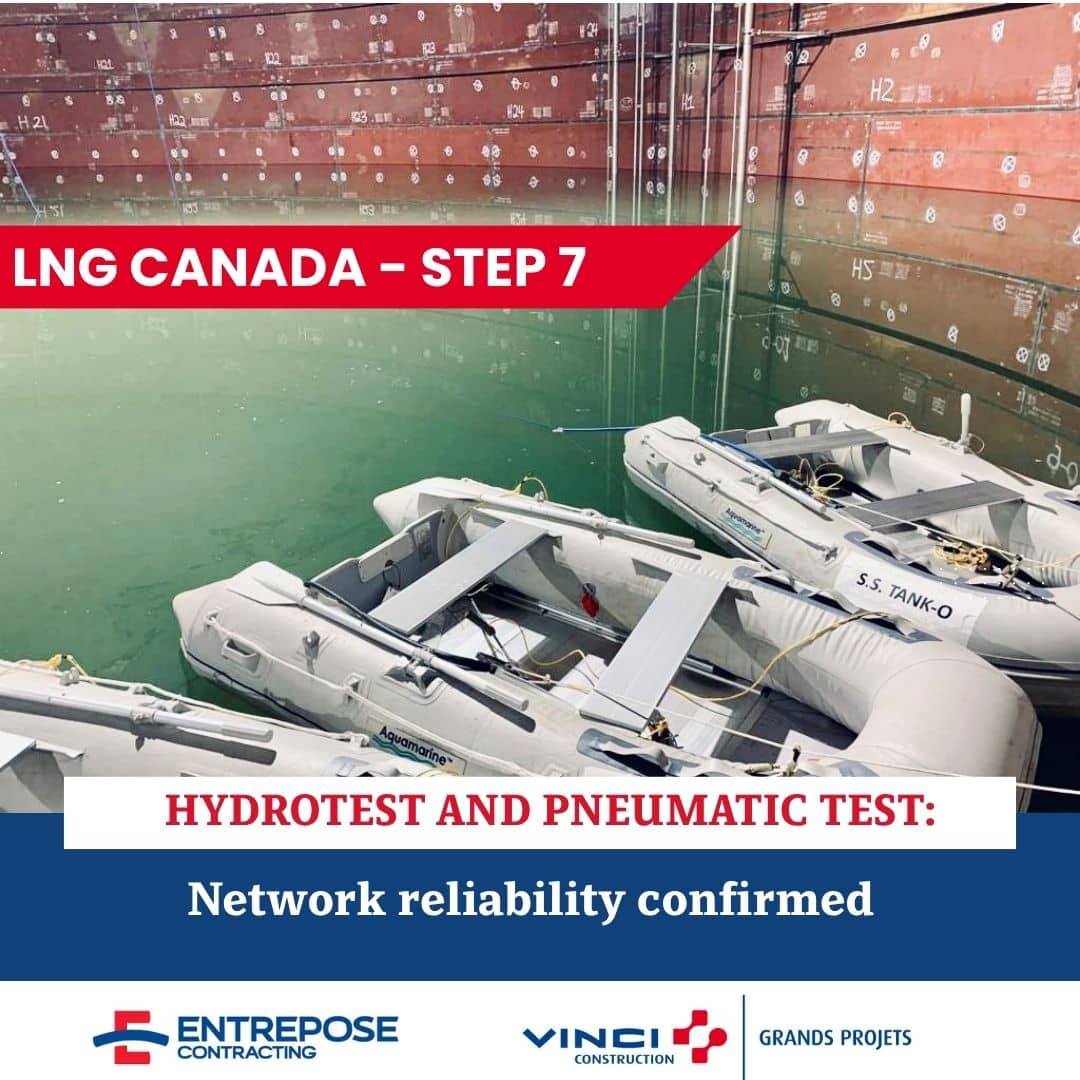
The main purpose to hydrotest a LNG tank is to verify the primary containment’s tightness and confirm the structural integrity of the foundation under full load conditions while the pneumatic test ensures the tank is gas-tight.
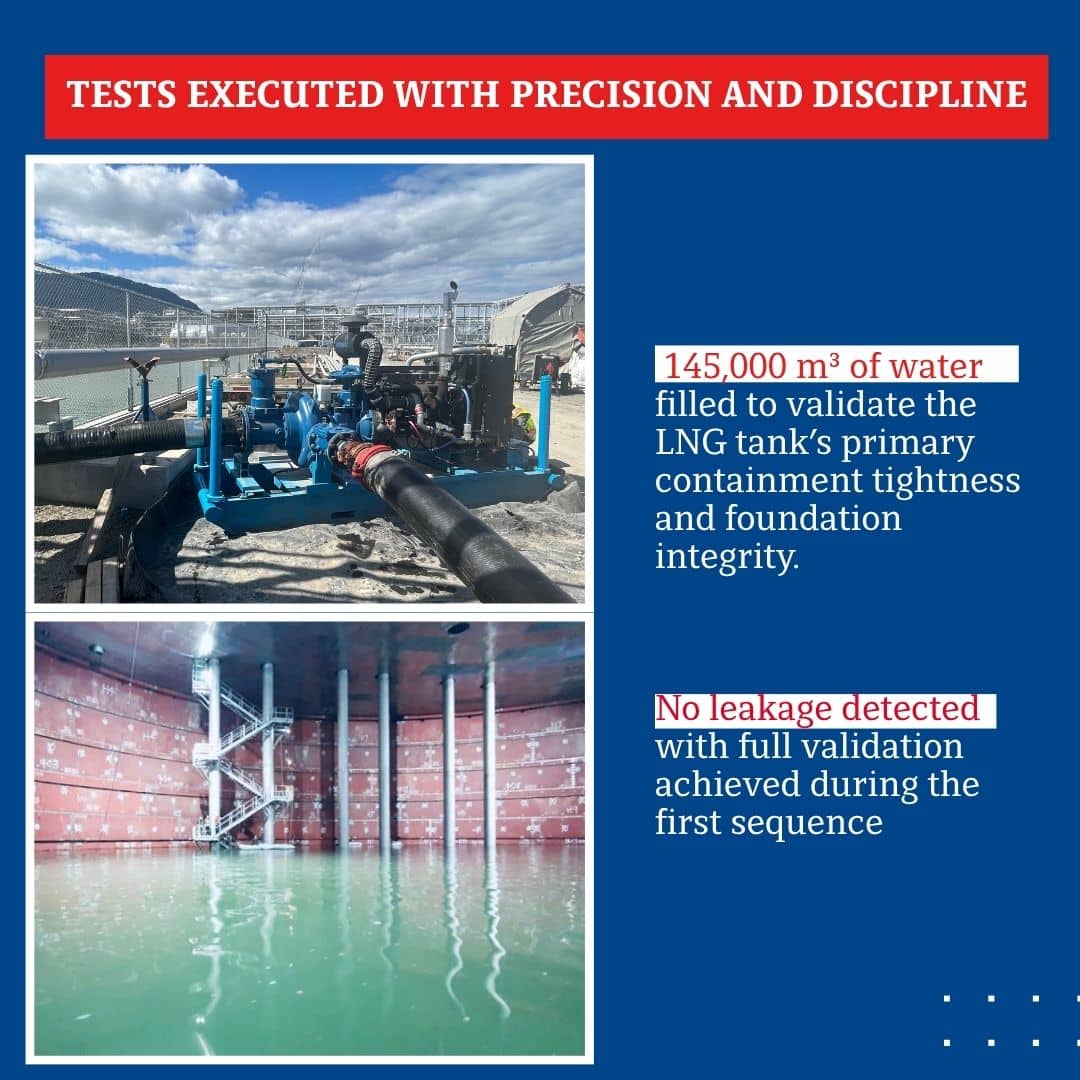
Tests executed with precision and discipline
• 145,000 m³ of water to validate the LNG tank’s primary containment tightness and foundation integrity
• No leakage detected, with full validation achieved during the first sequence
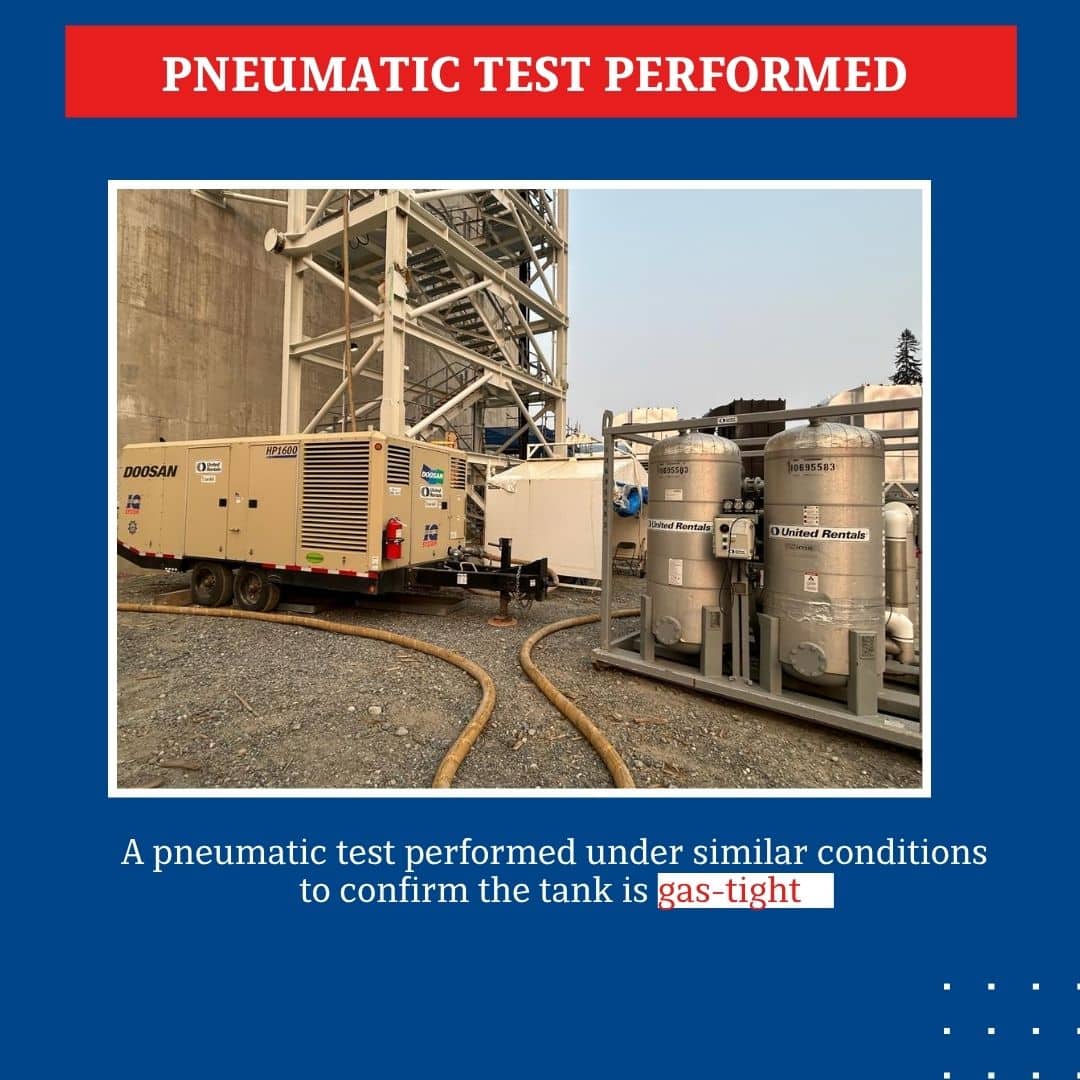
• A pneumatic test performed under similar conditions to confirm the tank is gas-tight and free from emissions
A collective achievement
These tests were made possible through close coordination between geotechnical, mechanical, and civil engineering teams, supported by construction, quality and safety oversight.
The achievement of this milestone reflects a shared commitment to delivering a safe, reliable, and fully compliant infrastructure.
Next step: final closure of the tank and nitrogen inerting of the tank
#LNGCanada #Hydrotest #PneumaticTest #Safety #TechnicalValidation #EntreposeContracting #VINCIConstructionGrandsProjets #EPC

Gabriela Victoria Santa Cruz Bustamante holds a PhD in Chemistry and chose engineering over research. Now Project Director for Cartagena GLP at Entrepose Contracting, a subsidiary of VINCI Construction Grands Projets, she leads technically demanding operations. A look at her career path and at the

From a distance, a cryogenic tank looks like a large storage tank. Up close, it’s something else entirely: a critical industrial system where a design flaw can have consequences over forty years of operation. At −162 °C for LNG and as low as −253 °C