The arrival of the first LNG carrier marked a historic moment for the LNG Canada project. This inaugural cargo initiated...
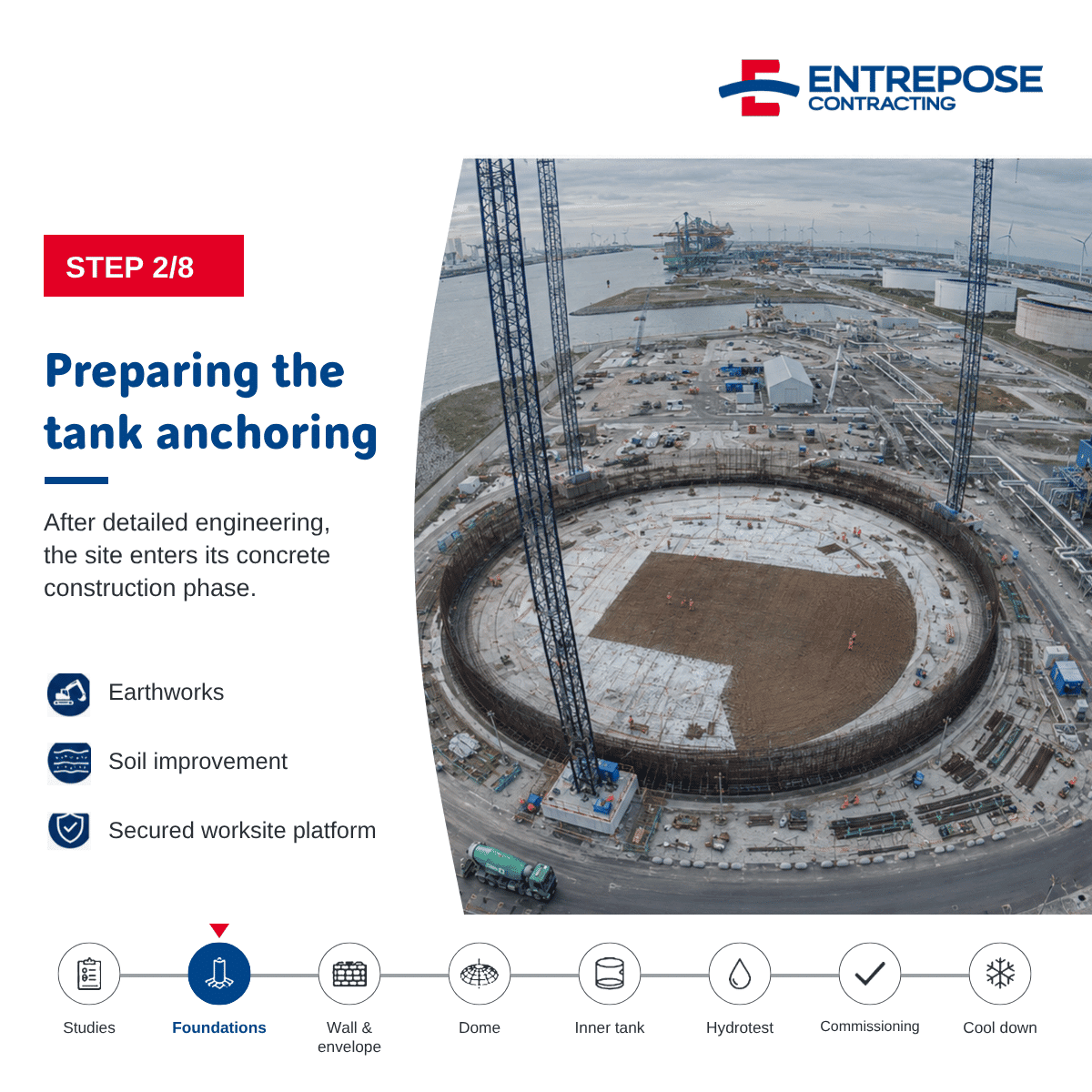
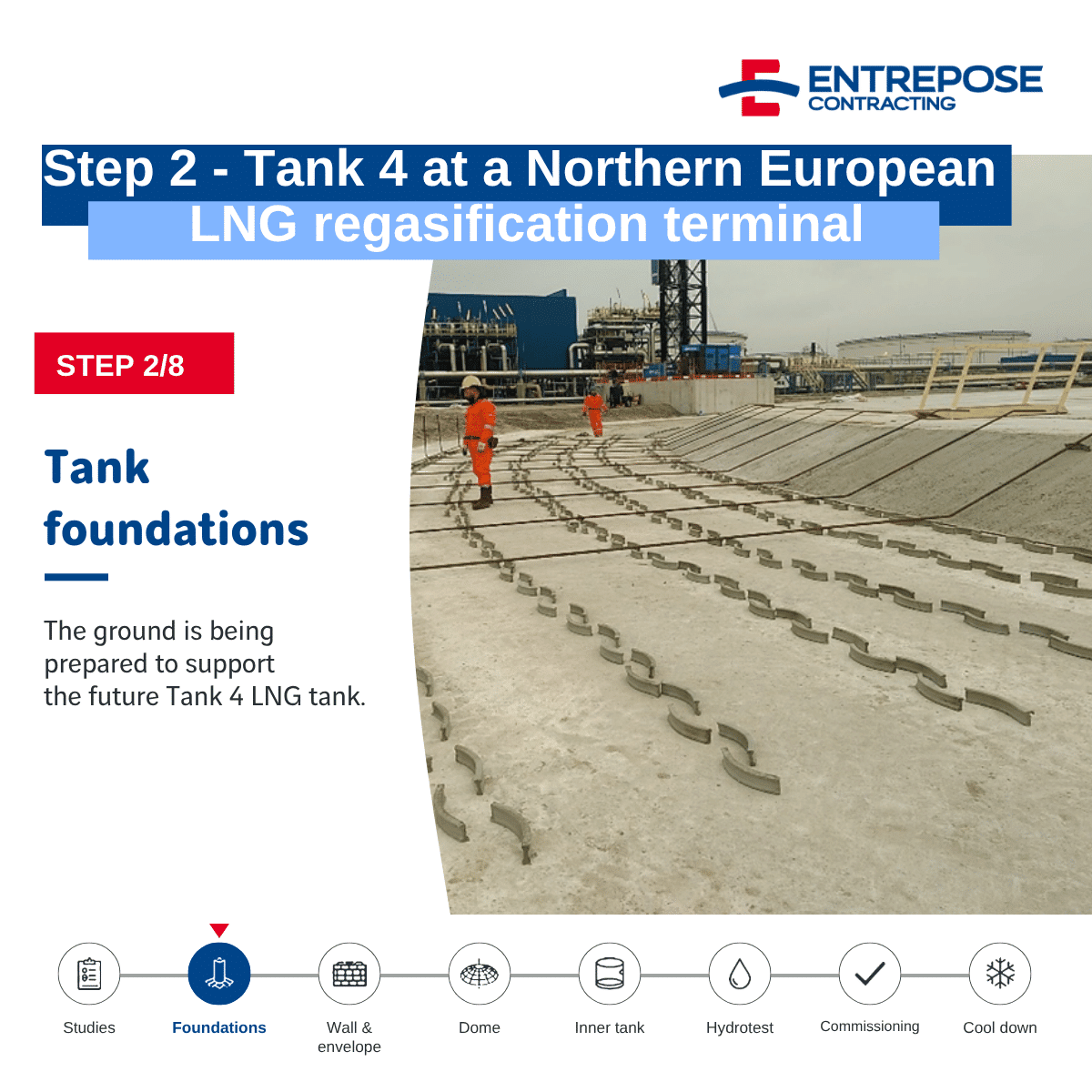
The stability of a cryogenic tank of this scale rests entirely on the quality of its foundations. Before the first concrete pour, Entrepose Contracting’s teams carried out earthwork and soil improvement operations, essential to the structural integrity of the facility.
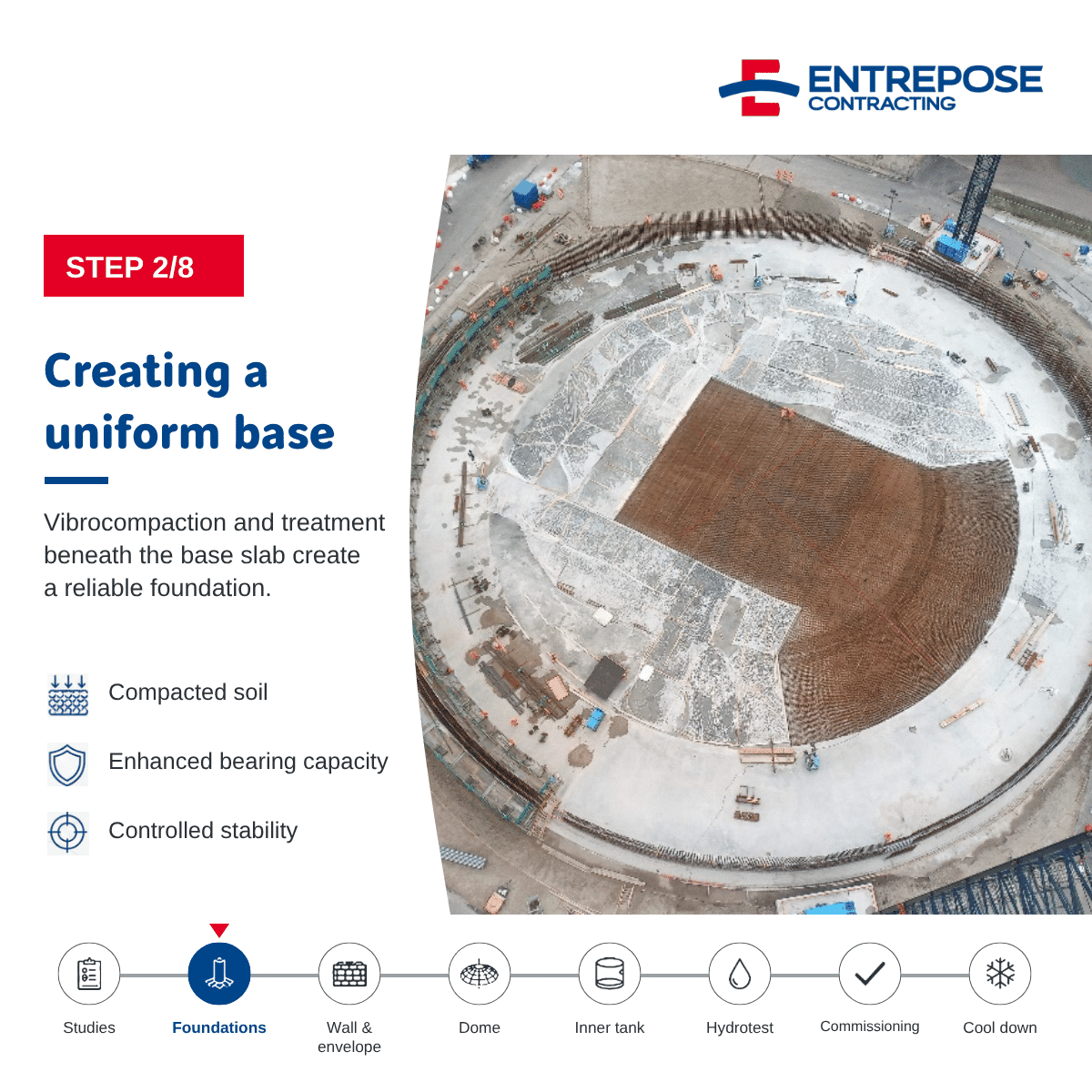
Vibrocompaction and sub-slab treatment provided a homogeneous and load-bearing base, capable of withstanding the considerable forces the tank will generate once in service. Each parameter — density, bearing capacity, homogeneity — was monitored and validated before progressing to the next stage.
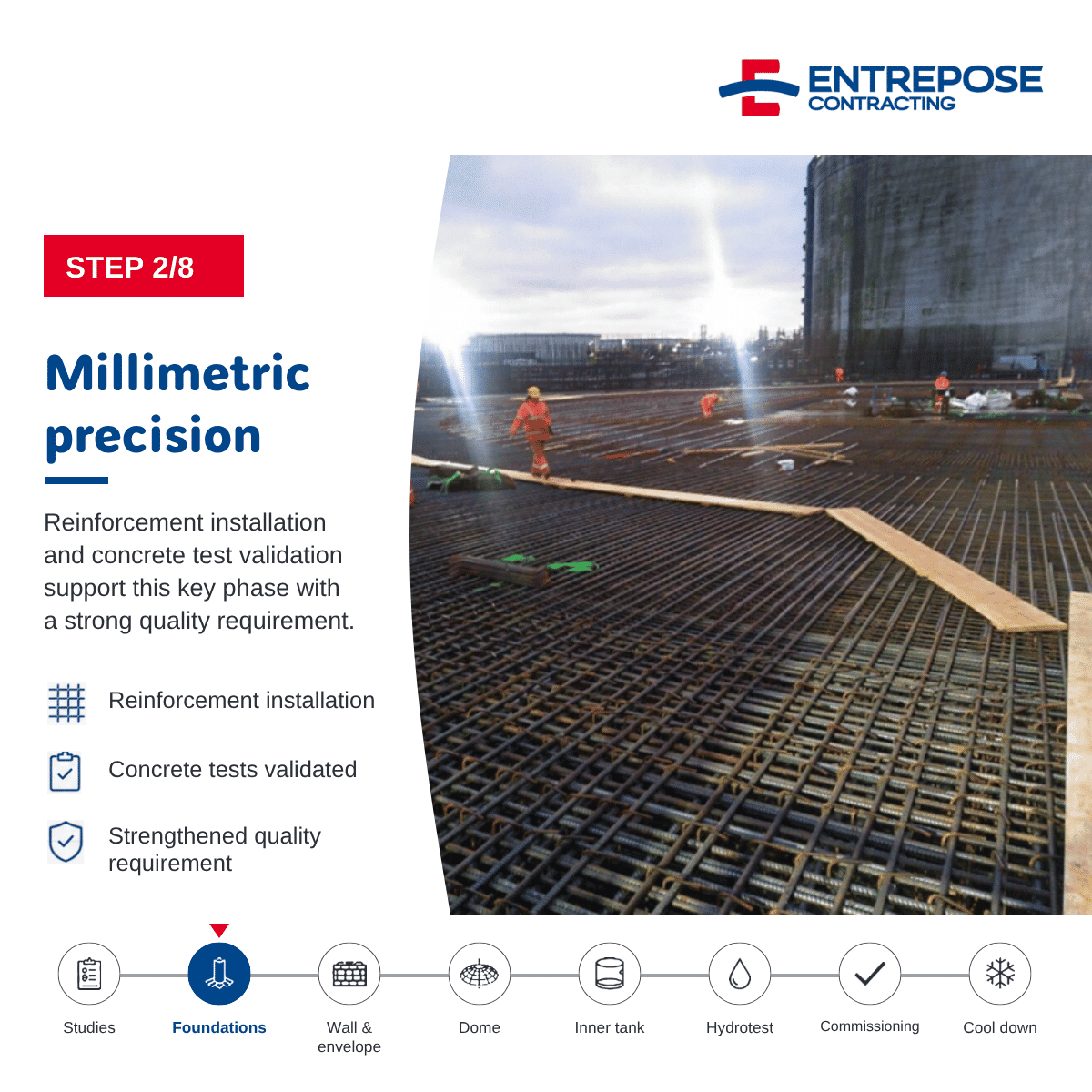
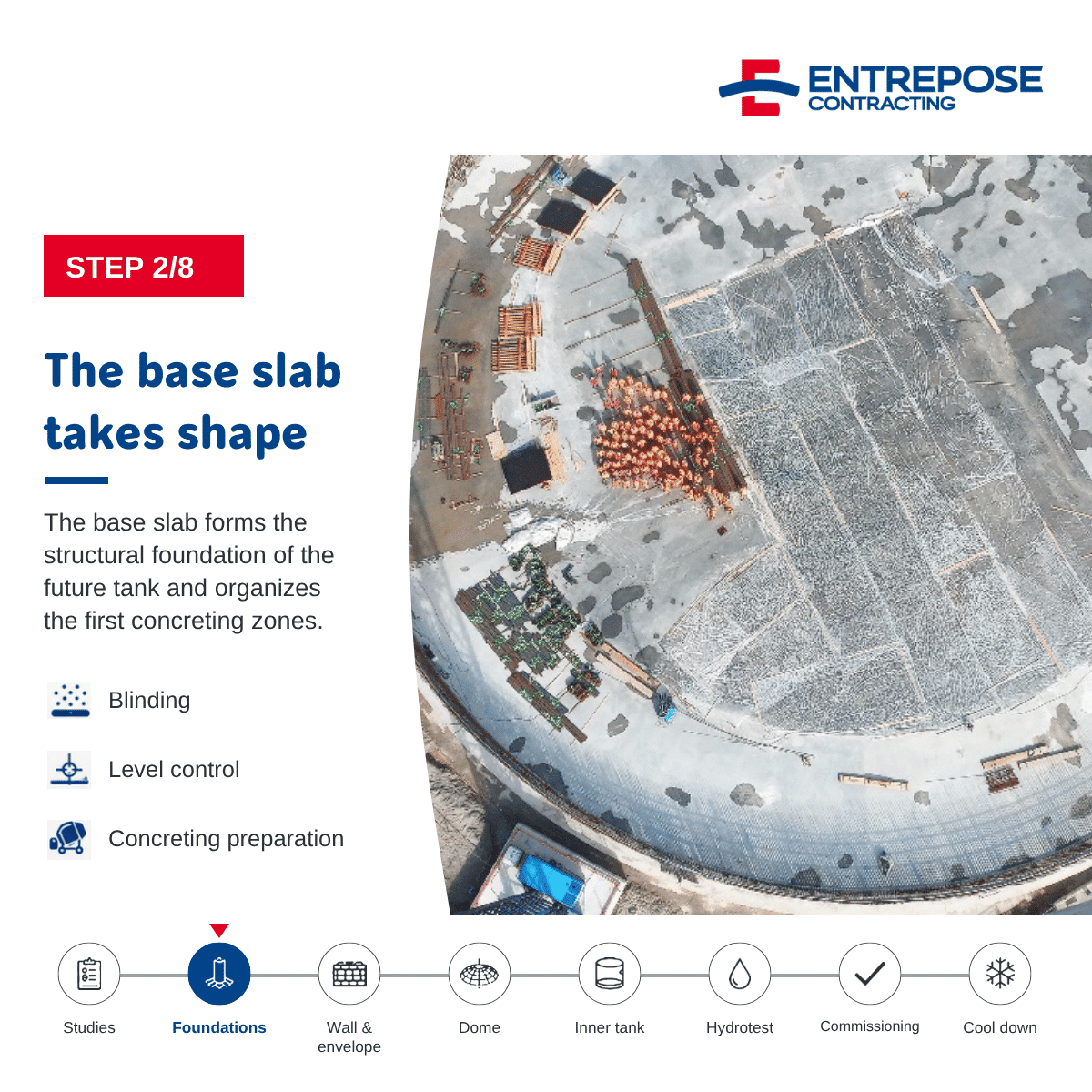
With the soil preparation completed, the teams laid the foundations for the main cranes — key structural assets on site, whose stability governs all future lifting operations. The slab then took progressive shape: installation of blinding concrete, laying of reinforcement, and validation of concrete mix design tests.
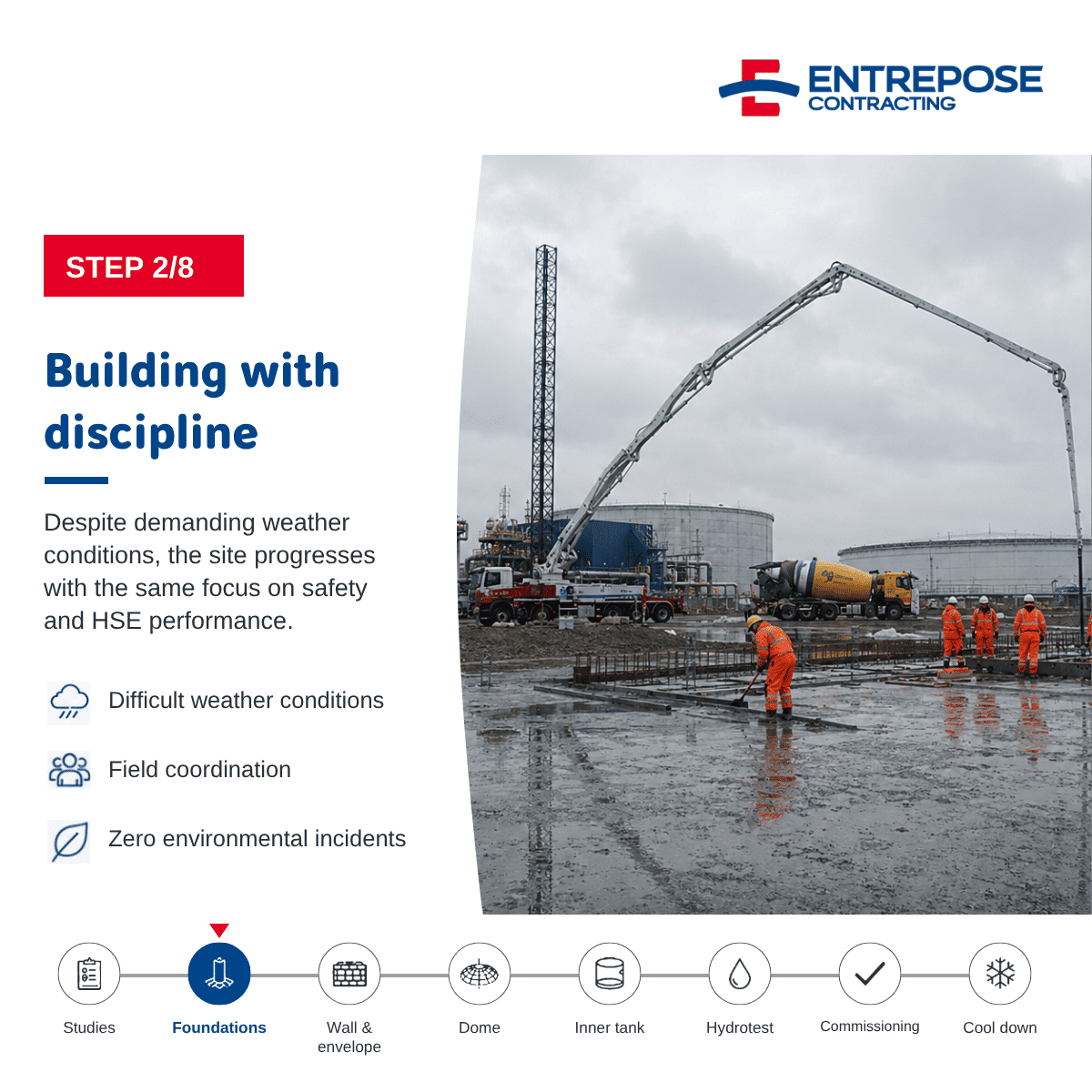
These activities were carried out with consistent technical rigor, despite difficult weather conditions — a constraint inherent to construction sites in the terminal environment.
Beyond their immediate technical value, these foundations serve two essential functions. First, they secured the tank platform. Second, they enabled the deployment of the first on-site logistics infrastructure, paving the way for the gradual ramp-up of construction activity.
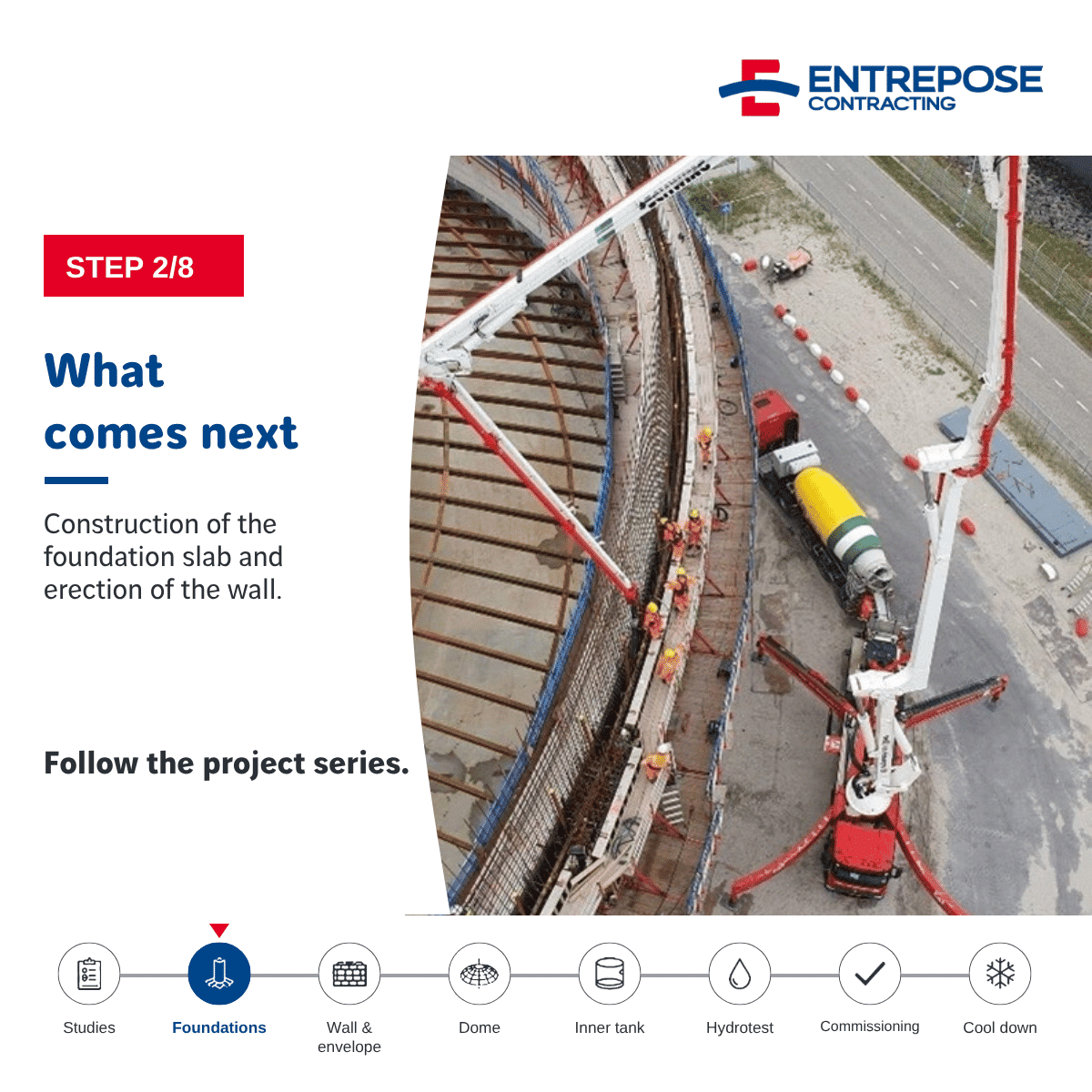
This phase literally lays the foundations for every subsequent steps: construction of the tank wall, dome lifting and, ultimately, installation of the inner tank. No HSE incidents were recorded during this period, reflecting the sustained attention paid to safety and environmental performance throughout.
The next stage of the project will mark the start of construction of the tank wall.

Purchasing equipment, arranging inspections, preparing transport and contracting construction work all form part of the same procurement chain at Entrepose Contracting. Caroline Bazin, Projects Procurement Director, explains how her teams meet project requirements through supplier selection, negotiation and the anticipation of supply risks.

– CONSTRUCTION SITE LOGISTICS: WHEN EVERY PART COUNTS –
On an international industrial construction site, receiving equipment does not necessarily mean it is ready for use. A missing certificate, a non-compliant part, or a customs clearance issue can complicate the progress of the work.