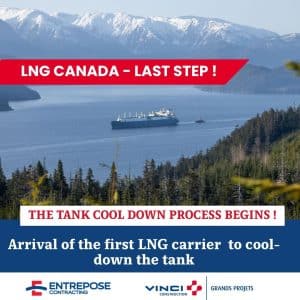
LNG Canada : A major milestone in our LNG Tank journey: cool-down has begun!
At a glance
turnkey EPC, JV Entrepose Contracting / VINCI Construction Grands Projets (Entrepose lead partner, 60%)
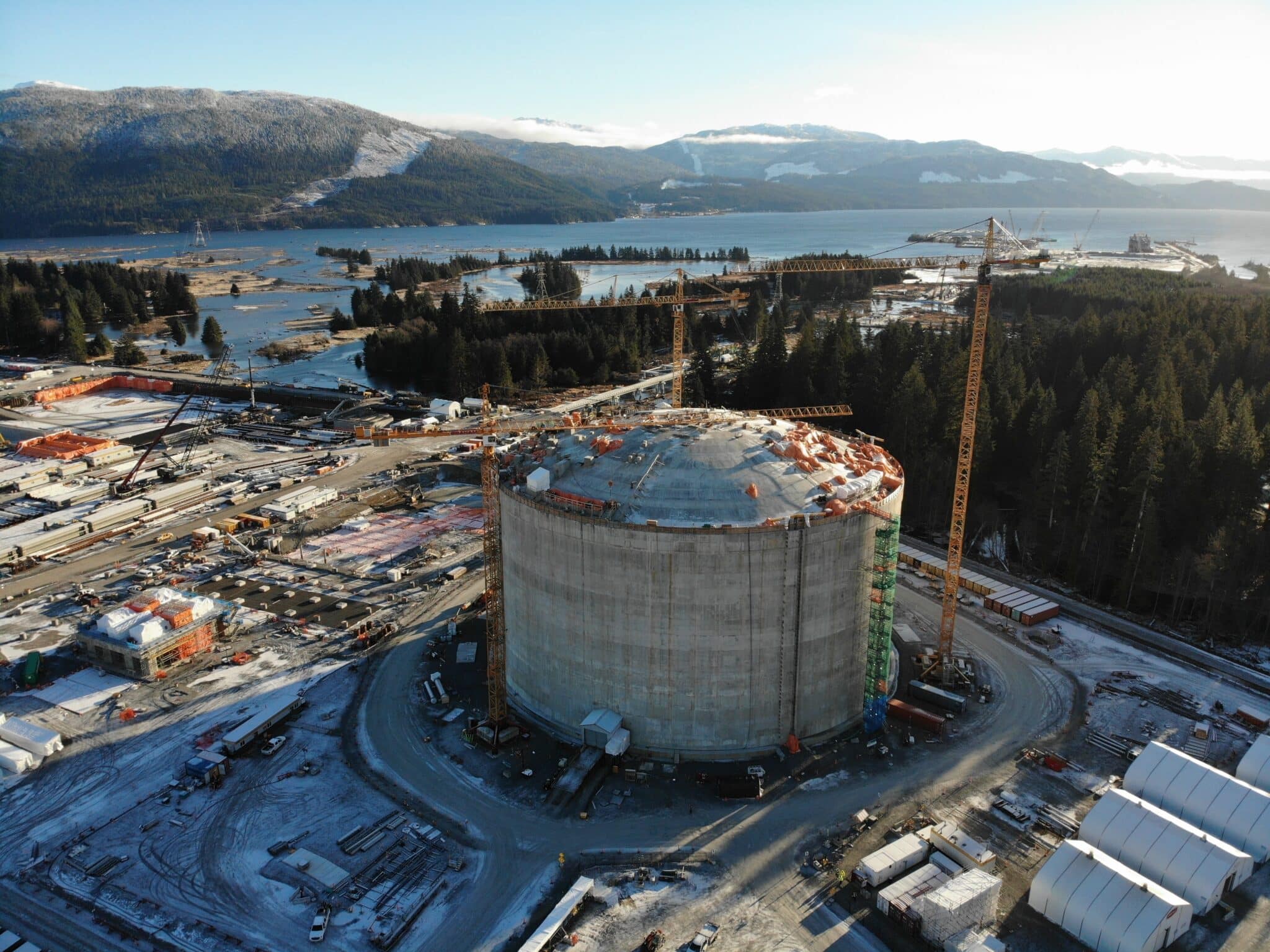
LNG Canada is Canada’s first large-scale LNG export terminal. Phase 1 (two trains, 14 Mt/y) primarily supplies Asia, with a typical transit time of around 10 days from Kitimat (vs ~20 days from the US Gulf Coast). Entrepose Contracting, in JV with VINCI Construction Grands Projets, delivered EPC design, procurement, construction, and commissioning of a 225,000 m³ LNG tank.
Environment: remote coastal site, demanding climate; design integrating climatic and seismic constraints, optimised insulation to limit boil-off.
Integrated EPC: Engineering–Procurement–Construction–Commissioning chain led by the JV to secure quality, safety, and asset performance.
What was your role on the LNG Canada project?
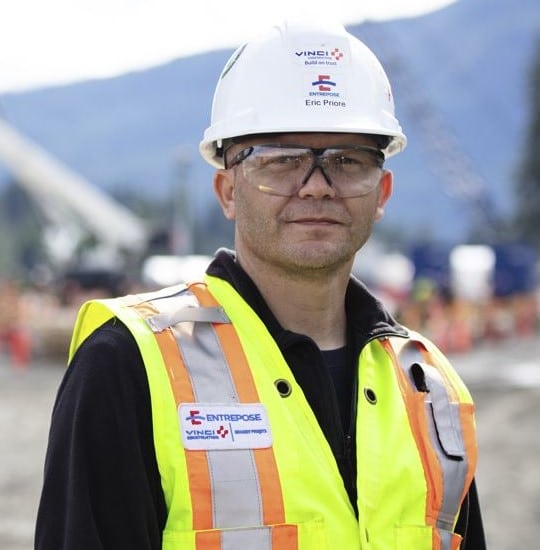
I was responsible for the day-to-day operational management of the site: health and safety, quality control, team coordination, interface management and on-site decision-making to ensure the work progressed at a steady pace.
In what way did this project make a particular impression on you?
Due to its extreme conditions. In Kitimat, the weather could change several times in the course of a single day: rain, sunshine, snow, black ice. This unpredictability meant we had to remain constantly vigilant to keep the teams safe and stay on schedule.
Which memory stands out the most?
The continuous casting of the roof, in the autumn. We finished just before the weather turned properly wintry. Had we missed that window of good weather, the work would have had to be postponed for several months.
What did you enjoy most over the past four years?
The atmosphere on site. Despite the intensity and length of the project, cooperation between the various trades remained respectful, smooth and constructive throughout.
An anecdote that illustrates the high standards of the project?
In preparation for the hydrostatic test, samples of river water were urgently sent to France for analysis. The aim was twofold: to ensure compatibility with the structure and to protect the local environment, a particularly sensitive issue for the local communities.